Tuesday, 1 October 2019

Willow - 'Workshop 23' - 2010s Retrospective

In the last 100 days before 2020, I'll be counting down by doing a retrospective of some of the classic releases/EPs of this decade, and maybe a few lesser known gems. Expect broken beats, some leftfield electronics and the odd cheesy banger :) 

(2016, Workshop)

Prolific though she is as a DJ, Manchester’s Willow has been quiet on the production front since 2016. While her only solo EP – Workshop 23 – didn’t go without praise and attention at the time, it’d be a shame if the lack of a follow up led audiences to neglect her work, because it’s some of the more interesting house music that’s been made recently. 

Her breakthrough song ‘Feel Me’ had a singular atmosphere that was both soulful and a little eerie – from a distance, Workshop 23 seems to continue in the same vein, but as well as refining the sound she’s established for herself, it brims with varied ideas. With an effective half time groove and buoyant bass, ‘Untitled A2’ feels every bit as influenced by dubstep as it does by house. ‘Untitled B1’ stays interesting without using much more than a repeated harp sample, and an eventual sawtooth bassline. It’d be reminiscent of Four Tet, if there wasn’t a stuttering quality to the swung harps, a fragility to the pads and a slight harshness to the bassline. 

Both ‘Untitled A1’ and ‘Untitled B2’ are in house territory, though they both come with her unique spin on the genre – beatless moments add dynamism to what drums there are, while choice vocal samples add both brightness and mystery. It may seem like they’re variations of the same idea, but the effect is markedly different on each; ‘Untitled B2’ is lush and enticing, while ‘Untitled A1’ feels a little paranoid.

On repeat listens, even Willow’s house tunes have more of a UK influence than is initially apparent – combination of skeletal beats and murky sub bass has hints of the more minimal strain of post-dubstep, occupied by producers such as Parris (or even early James Blake). To dwell on its influences would be missing the point though, as Workshop 23 first and foremost sounds like itself. If we don’t hear any more from her as a producer, at least the music Willow did share was completely fully formed.

Monday, 30 September 2019

Objekt - 'Cactus/Porcupine' - 2010s Retrospective

In the last 100 days before 2020, I'll be counting down by doing a retrospective of some of the classic releases/EPs of this decade, and maybe a few lesser known gems. Expect broken beats, some leftfield electronics and the odd cheesy banger :) 

(2011, Hessle Audio)

At the point in time, TJ Hertz aka Objekt is arguably – and rightly – the most respected and acclaimed DJ/producer on the circuit, and as labels go, the same can be said of Hessle Audio. So yes, Cactus/Porcupine really is a special release – which is funny, since Objekt seems to have largely washed his hands of this era of his work. 

As Objekt, TJ Hertz's music has always been forward-thinking and penetrating, but his sound has certainly progressed over the years. His initial releases were irreverent but razor-sharp takes on preeminent genres at the time: avant-garde and excellent though they were, they were still easy enough to pin down. On his most recent (and much lauded) album Cocoon Crush, however, his approach to sound and songwriting was pretty much unclassifiable. In that respect, Cactus/Porcupine occupies a particularly interesting space – still fitting within his playfully banging early work, but containing elements of his more abstruse recent output. 

‘Cactus’ made bigger waves upon its initial release, which is understandable. The sinister wubs and edgy beat were a timely (in 2011) deconstruction of dubstep, taking the genre’s halftime lope and heavy basslines to an ominous, almost anxiety-inducing conclusion. Beginning with just bass and some abstract drums, it's almost unmixable to start. But when regular hi-hats enter the fold, they don't ground 'Cactus' - if anything, they make it sound more jagged, more threatening. It’s B-side ‘Porcupine’, however, that I think has aged better, and TJ might just think the same – in his live set in London, this was the only pre-Flatlands song that made the cut. The stuttering electro beat plays no small part in its enduring appeal, as does a bassline that has to be heard to be believed – but it’s the sounds that are dotted around ‘Porcupine’ that really make it stand out. Clicks, hisses and jitters have an alien and ghostly quality that’s otherwise unique to his LPs – and they genuinely add to the thrill of the song, rather than clutter and confuse it.

Though these taut, hard-edged tunes feel like a direct response to the music of their era, they also show one of the decade’s true visionaries starting to create their own lane. He may not think the same, but as far as I'm concerned, this is one of the decade's best electronic artists at the top of their game. 

Sunday, 29 September 2019

Szare - 'POLITY01' - 2010s Retrospective

In the last 100 days before 2020, I'll be counting down by doing a retrospective of some of the classic releases/EPs of this decade, and maybe a few lesser known gems. Expect broken beats, some leftfield electronics and the odd cheesy banger :) 

(2019, Polity)

Whether it’s down to their relatively quiet touring schedule or virtual anonymity, Szare haven’t quite emerged as one of the most well-known experimental dance music acts of the 2010s, but they’re up there with the best of them. Like many of their UK contemporaries (Shackleton, Akkord), their sound has been equally influenced by the likes of grime and dubstep as it has been by techno over the last decade – but the trajectory of their output has been far from linear, standing apart from trends and in-vogue sounds. Since their beginnings, they’ve combined elements of bass and techno with more esoteric sounds, to create moody and memorable music that stands in a league of its own. Around ten years after their debut, they put out one of their best works yet in the form of POLITY01.

Everything about A-side ‘Miner’ makes a lasting impression. From the get-go, the track's tribal drums make it one of the more distinctive club tracks this year, with slamming syncopated kick drums adding to its off-kilter intensity. Really though, it's when sinister, minor key strings are brought in that the track reaches fever pitch. The sample used here reminds me of dubstep classics like 'AMK', which used Middle Eastern strings to great effect, combined with its offbeat rhythm, 'Miner' ups the freneticism.

Complete with a halftime beat, horns and sub bass, 'Cut With Glass' finds Szare sitting pretty squarely in dubstep territory - but like 'Miner', the presence of hand drumming gives it a more characterful rhythm. 'Drop Shadow' rounds off the EP, and while it takes a different approach to the previous two tracks - this one's a 100bpm stomper - an oscillating bassline and some ominous strings continue satisfyingly sinister mood. It's impressive to put out a release which draws from so many ideas - even more impressive is just how cohesive Szare make it sound. 

Saturday, 28 September 2019

Loom - 'London Ambient' - 2010s Retrospective

In the last 100 days before 2020, I'll be counting down by doing a retrospective of some of the classic releases/EPs of this decade, and maybe a few lesser known gems. Expect broken beats, some leftfield electronics and the odd cheesy banger :) 

(2017, Gobstopper Records)

A young geezer sits on a metal staircase with a Red Stripe and ciggy in hand. Superimposed over this image is a chained Rottweiler, and circling this, the words London Ambient: the title of today’s EP. Usually I’m not into sleeves featuring the artist’s image, but in this case, I make an exception – the sleeve is a bang on representation of London Ambient’s sound and attitude, produced by London-based grime experimentalist Loom. 

‘Ambient’ doesn’t refer to actual ambient music in this case (though there is some on the EP) – really, it alludes to the music’s nostalgia and mythologizing of the history of London rave music. Rather than honing in on one specific sound or era, however, it effortlessly incorporates a number of them, namely hardcore, bass and acid house. The main body of this release is very dancefloor-focussed, but there are leftfield, reflective elements that crop up in even in this EP’s most banging moments.

Of the club songs, ‘Dog In The Fight’ is a highlight, complete with gritty hi-hats and claps that give added energy to its 303 lead and broken beat. Even more of a standout is ‘Saturday Job At Laser Quest’, which largely revolves around a brilliantly garish bassline, but breaks down into mysterious pads and a ridiculously stretched vocal. These elements don’t sound entirely out of place in a dark garage song, but they’re elongated to an almost hypnagogic effect. When that bassline returns, you’ve almost forgotten what you’re listening to. On the ambient side, ‘Heavy Glow’ creates a sense of anticipation and drama with pads that are accentuated by horns and stabs. Given that London Ambient largely focuses on straight rave music, it’s a remarkably well rounded, conceptual and at times introspective EP. 

Friday, 27 September 2019

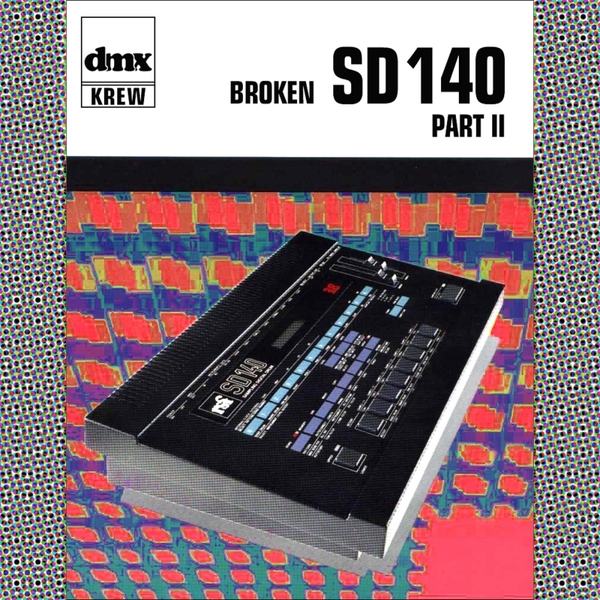
DMX Krew - 'Broken SD140 Part II' - 2010s Retrospective


In the last 100 days before 2020, I'll be counting down by doing a retrospective of some of the classic releases/EPs of this decade, and maybe a few lesser known gems. Expect broken beats, some leftfield electronics and the odd cheesy banger :) 

(2013, Breakin Records)

Broken SD140 Part II lives up to its name within seconds. A four to the floor kick drum loops, then displaces itself, before breaking into a retro-sounding, Rephlexian beat. Not entirely new territory for DMX Krew aka Edward Upton, who’s actively been making hardware electro for 25 years, but this EP is a standout example of how versatile he can be within the confines of specific production methods.

Highlight ‘Dramatic Exit’ starts with a warm, low-mid synth, which sustains an inviting and light-hearted melody throughout the song. Underneath this, however, is some restlessly brilliant drum programming – shakers, cymbals and snares are constantly at move. A touch of reverb bathes the whole track in a pleasantly dreamy haze.

The next track makes a dramatic shift: ‘Sppoookey’ has more in common with the hard-edged, zappy electro that’s become so in vogue today. That said, it’s still a restrained and refined affair – the beat is brought to life by snares that come at different velocities, and kick drums that are genuinely punchy and not overly heavy on the low end.

On ‘Apple Grid’ – and opener ‘Honeydew’ – there’s a slight kitschiness to the synths that makes them feel both retro and futuristic at the same time. ‘Apple Grid’ in particular has a melody with plenty of actual funk, a reminder of where electro came from. Complete with ethereal arpeggiation and snare rolls, closer ‘Superficial Appearance’ builds a sense of anticipation. It’s for a payoff that is delivered with a lot of subtlety – here, the smallest synth modulations and one-shots provide plenty of satisfaction and catharsis. The same is true of this whole EP.

Wednesday, 25 September 2019

Breaka - 'Rory's Theme/Puffer Jackets' - 2010s Retrospective

In the last 100 days before 2020, I'll be counting down by doing a retrospective of some of the classic releases/EPs of this decade, and maybe a few lesser known gems. Expect broken beats, some leftfield electronics and the odd cheesy banger :) 


(2018, Holding Hands)

As much as my little (long) New Years' countdown is about revisiting classic releases and legacy names, it's also a great opportunity to cover some of the artists and labels that have a bright future. Exhibit A: ascendant label Holding Hands, which is just about one of the most likeable things in UK dance music right now. Many of its best releases to date have married elaborate beatmaking with a gloriously no-frills attitude, in turn creating takes on electro, house and bass music that are technically impressive but unpretentious and genuinely fun. A shining example is ‘Rory’s Theme/Puffer Jackets’ from Breaka, a record that any contemporary UK DJ could do with having in their collection (though by all accounts, most of them do – this EP isn’t easy to acquire on Discogs without forking out a fair bit of money).

‘Rory’s Theme’ made the biggest waves last year, having appeared on an excellent Call Super boiler room (love you Call Super). Its footwork and bass influences aren’t entirely without precedent, calling to mind early-2010s Pearson Sound in particular – but the execution is killer. Its drum programming has the kind of intricacy that adds to the song’s dancefloor readiness, rather than detracting from it - and all the while, 16th synths provide a dizzying build up to that show stopping bass.

‘Puffer Jackets’ revolves around a sub-heavy beat that sits somewhere between garage and electro. It's not hard to imagine how weighty it'd feel on a proper sound system, though it has added levity and leftfield appeal in the form of a quirky vocal sample, reworked to rhythmic effect. Rounding off the EP is a remix of 'Puffer Jackets' from the Holding Hands boss himself, Desert Sound Colony. Following the more lairy first two tracks, it’s a slight change of pace, but nicely combines hard snares with a dubbed out take on the vocals. The phrase ‘dancefloor weapon’ gets thrown around pretty loosely these days, but in the case of the songs here, it’s an understatement.